Dénia claims to be a green city, but its own photos tell another story
Dénia Town Council defends a city that is "welcoming, healthy and sustainable", with 600,000 square metres of green spaces. But the images it releases show dry plots and recently cleared land. Other cities, also with dry summers, have opted for recycled water, trees and heat-adapted grass. Is it a matter of climate or of choice?
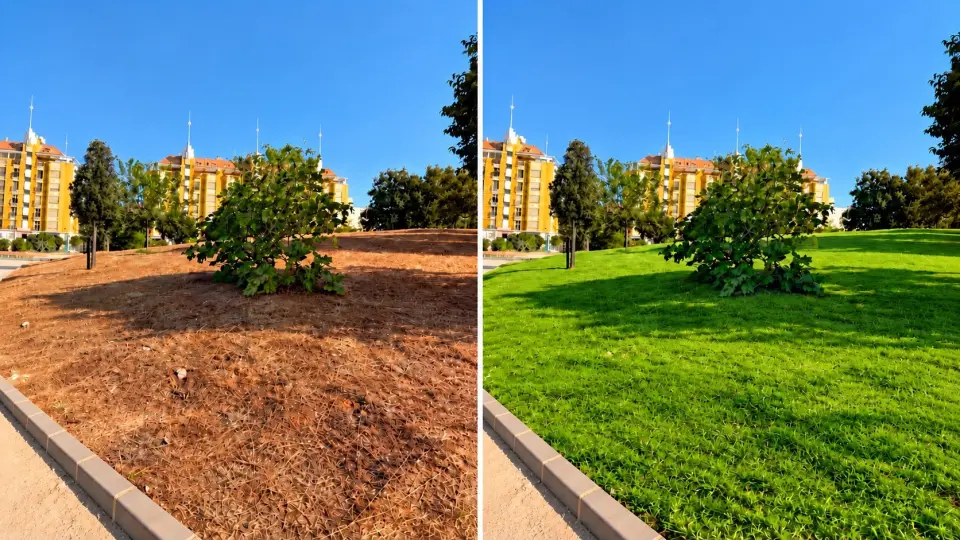
A city that presents itself as green
The municipal message is clear. When presenting the Bosc de Diana project in March 2025, the then deputy mayor and current mayor, Rafa Carrió, framed the park within the local government's city model, which aims to make Dénia a city that is "welcoming, healthy and sustainable". The Councillor for Territory, Maria Josep Ripoll, has described it on several occasions as "the great green lung of the city".
Official figures support that narrative. According to the Councillor for Parks and Gardens, Pepe Doménech, Dénia has approximately 600,000 square metres of green spaces. With a population exceeding 50,000 inhabitants, that equates to about 12 square metres per resident, above the minimum of 10 required by Valencian planning legislation.
But the law only measures how much land is reserved. It says nothing about whether that land has green grass, trees or shade. And that is where the question begins.
What the Town Council itself shows
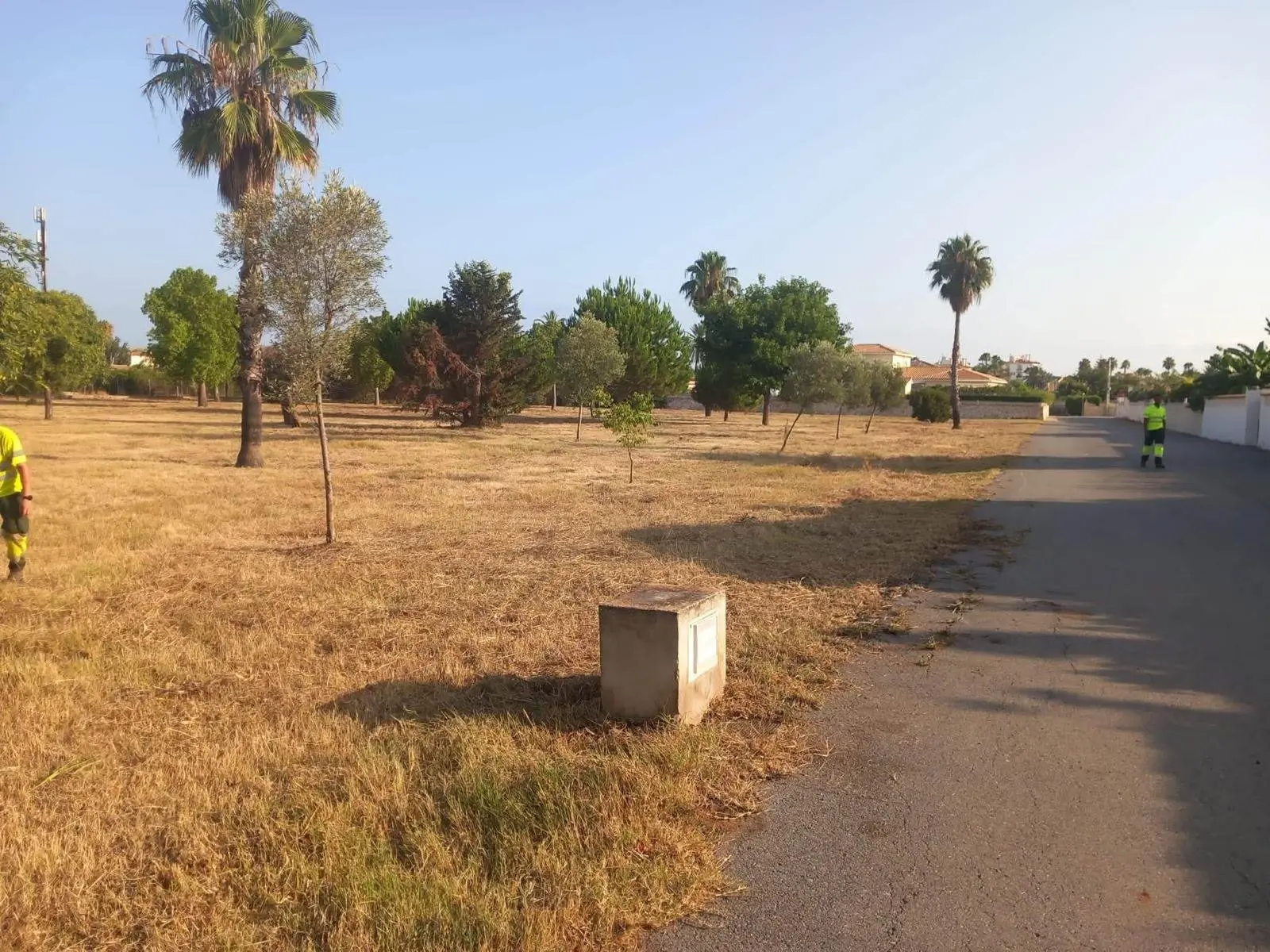
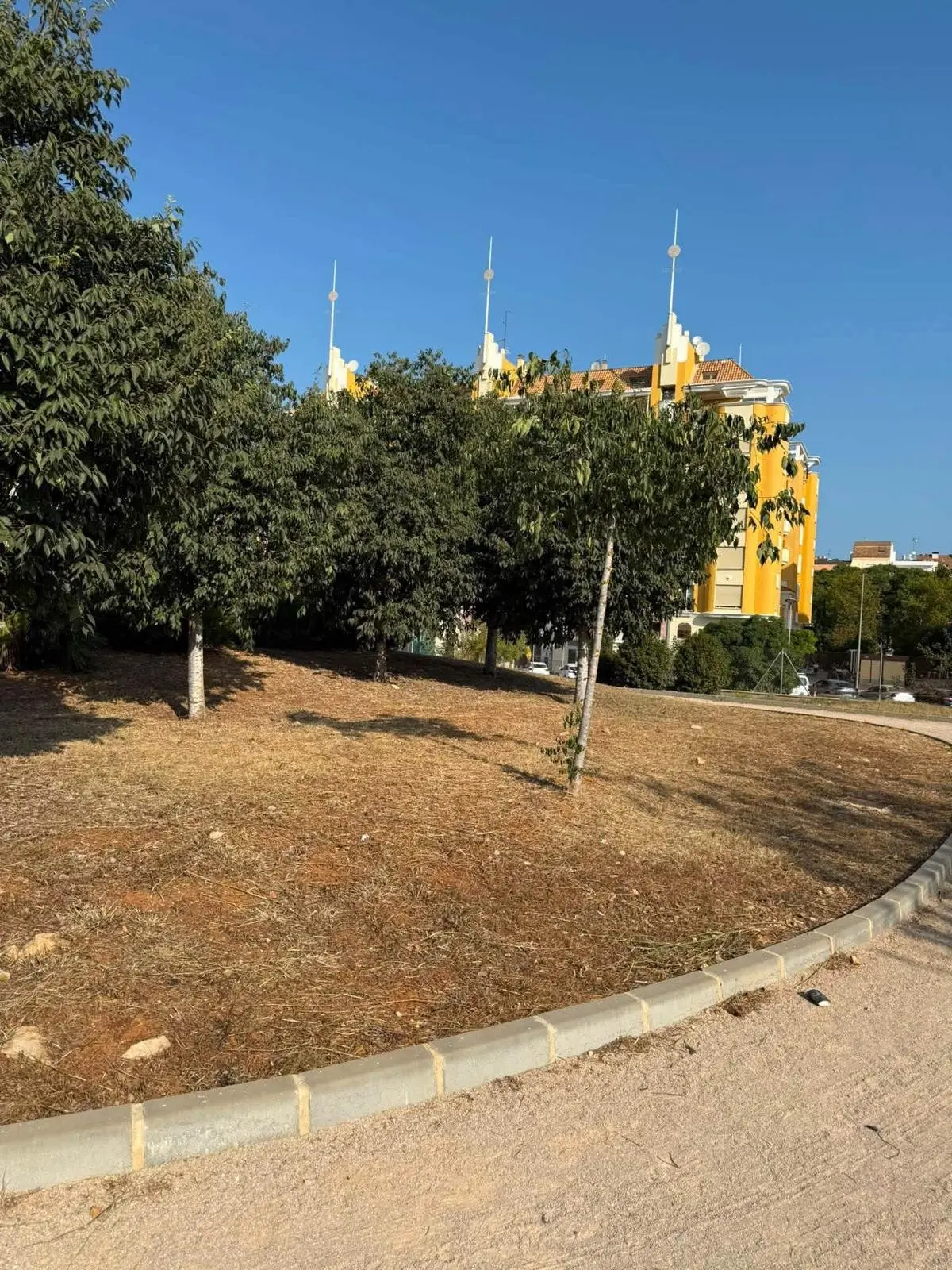
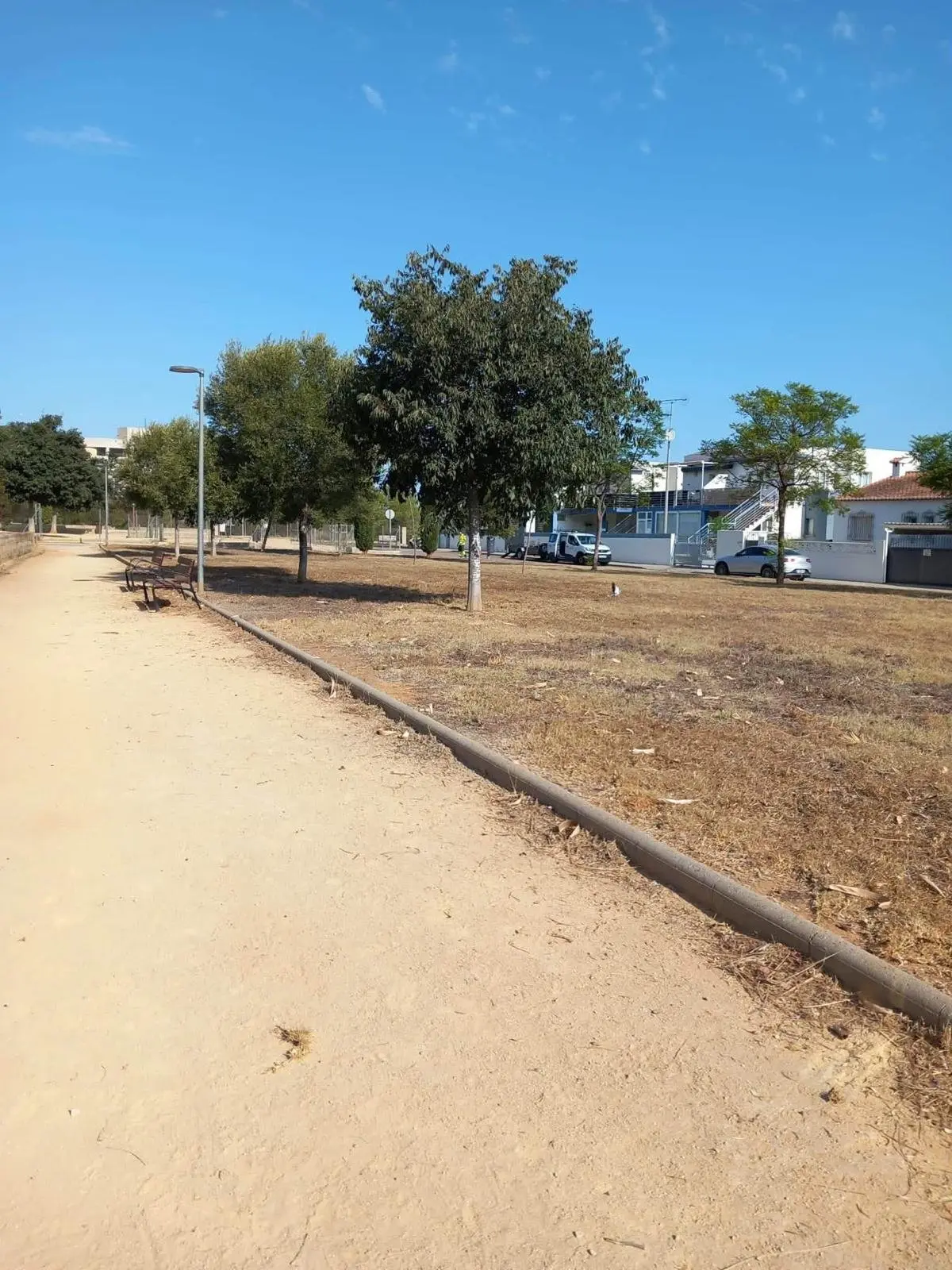
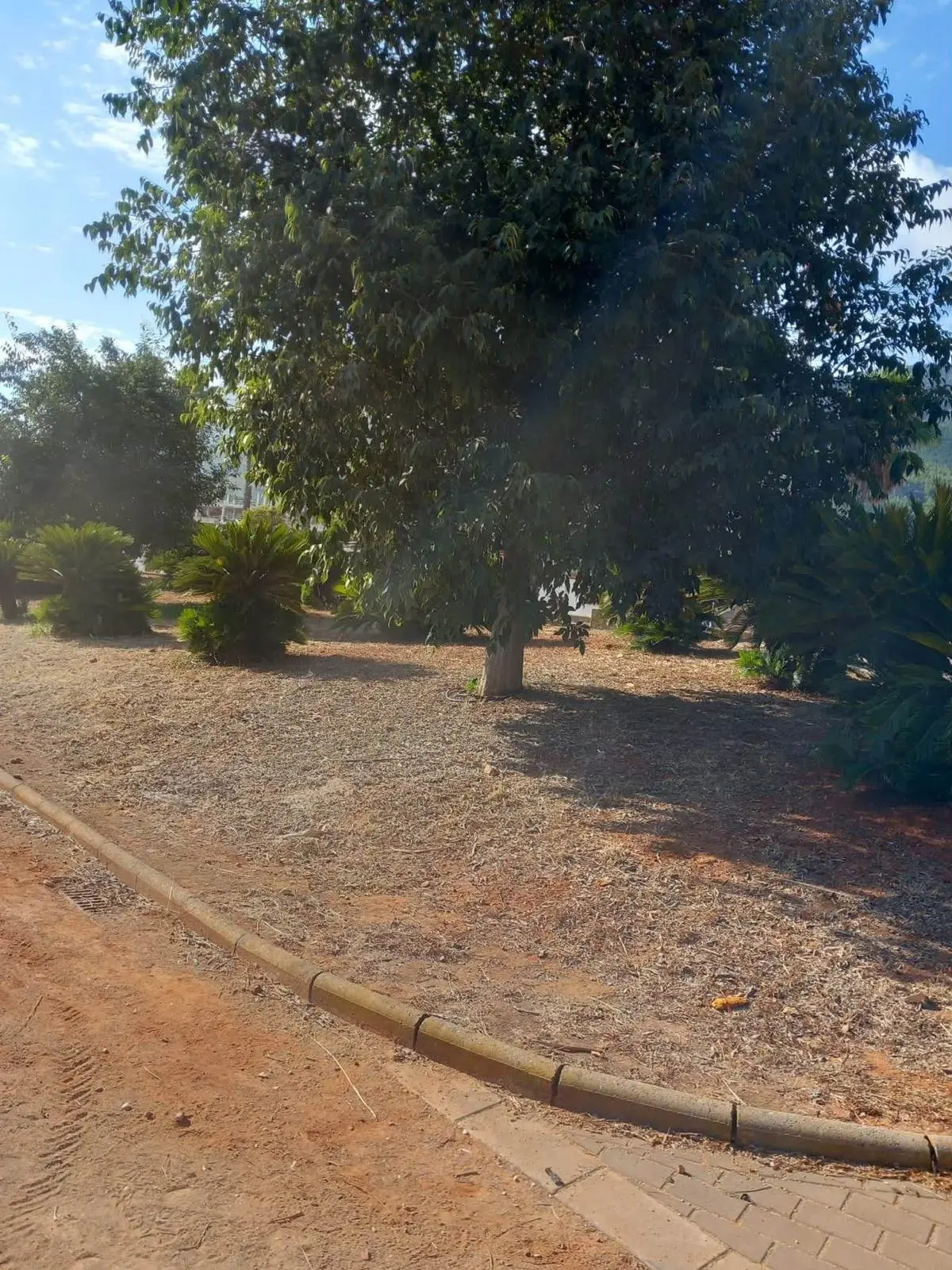
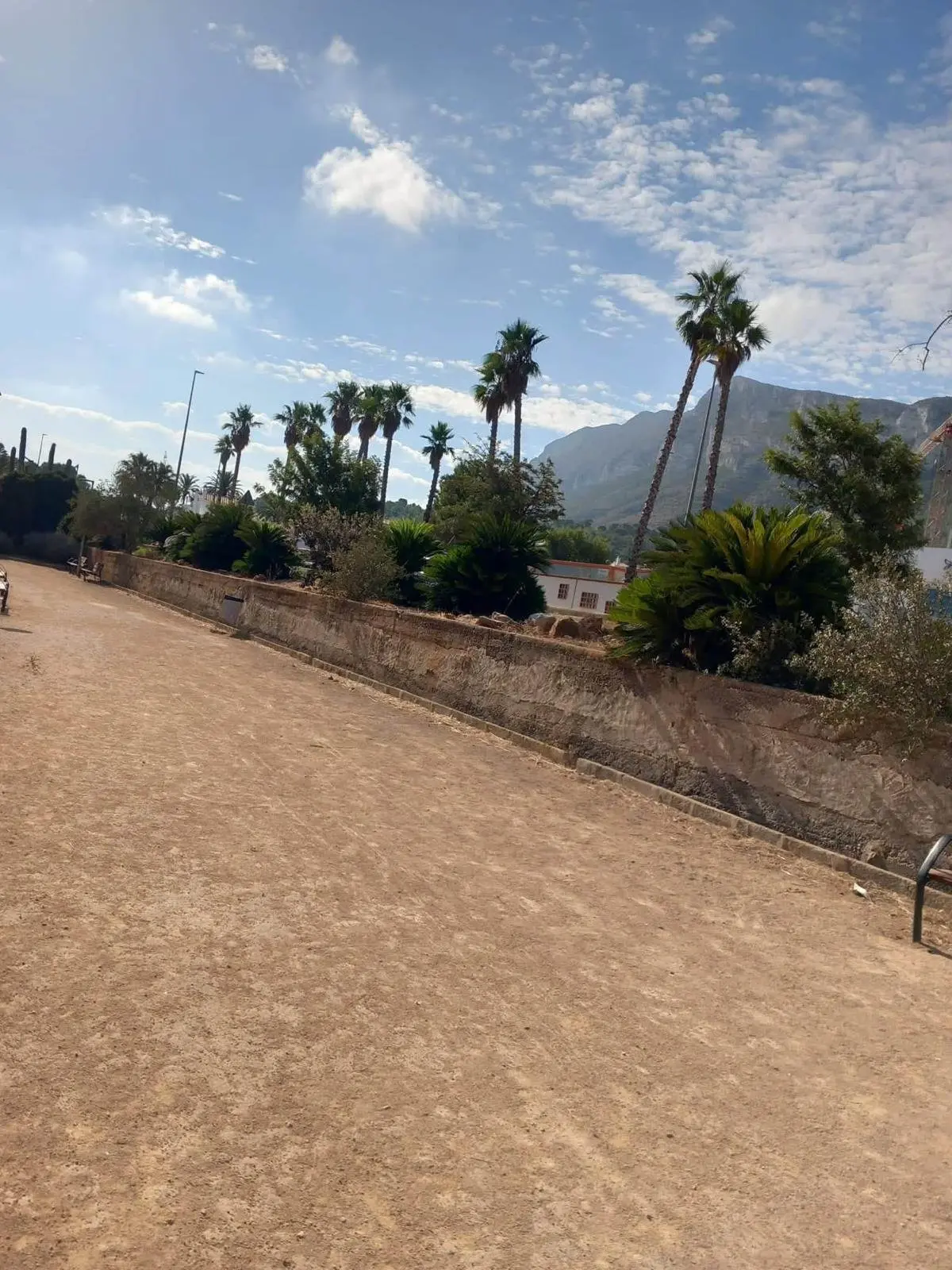
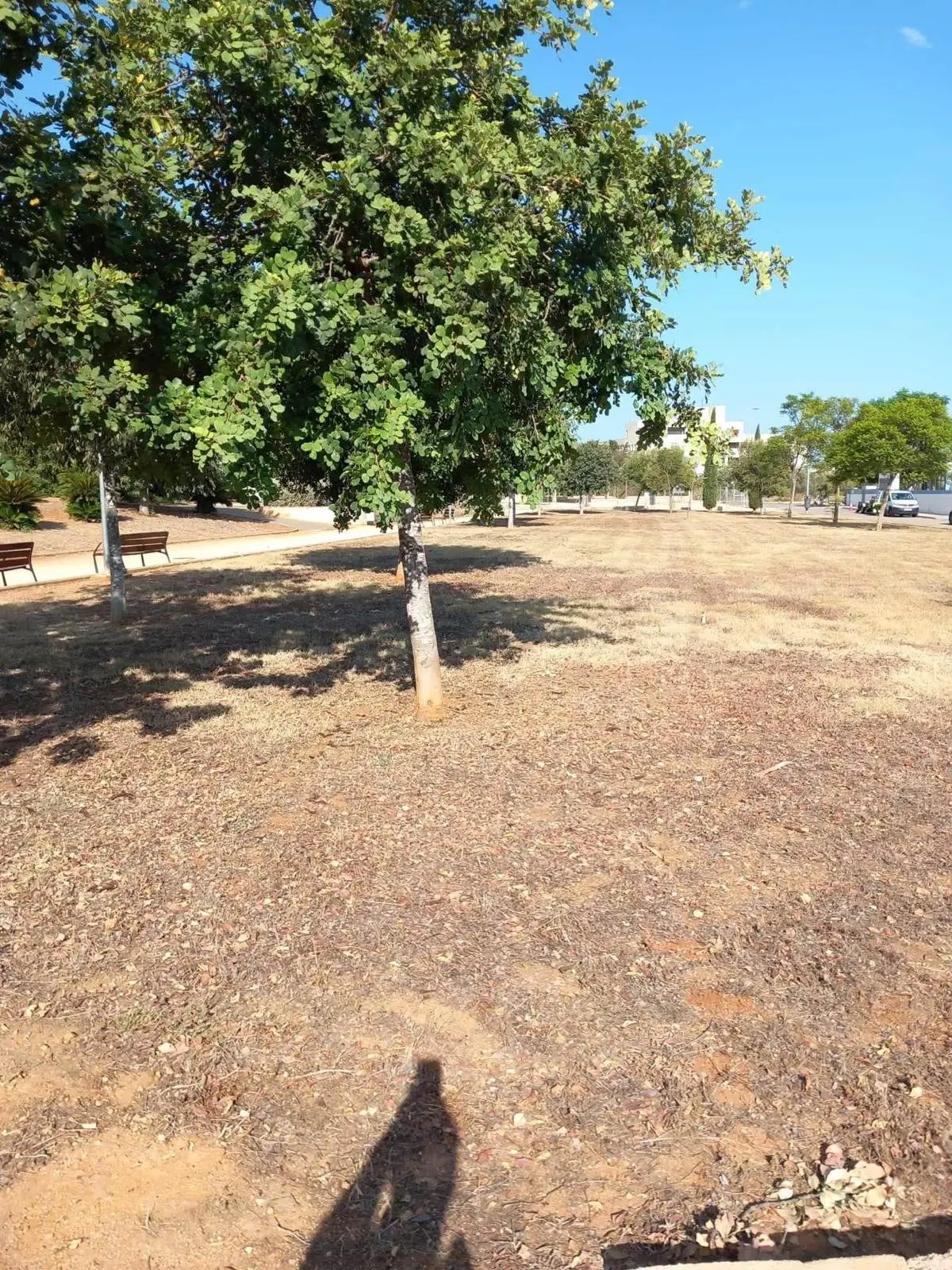
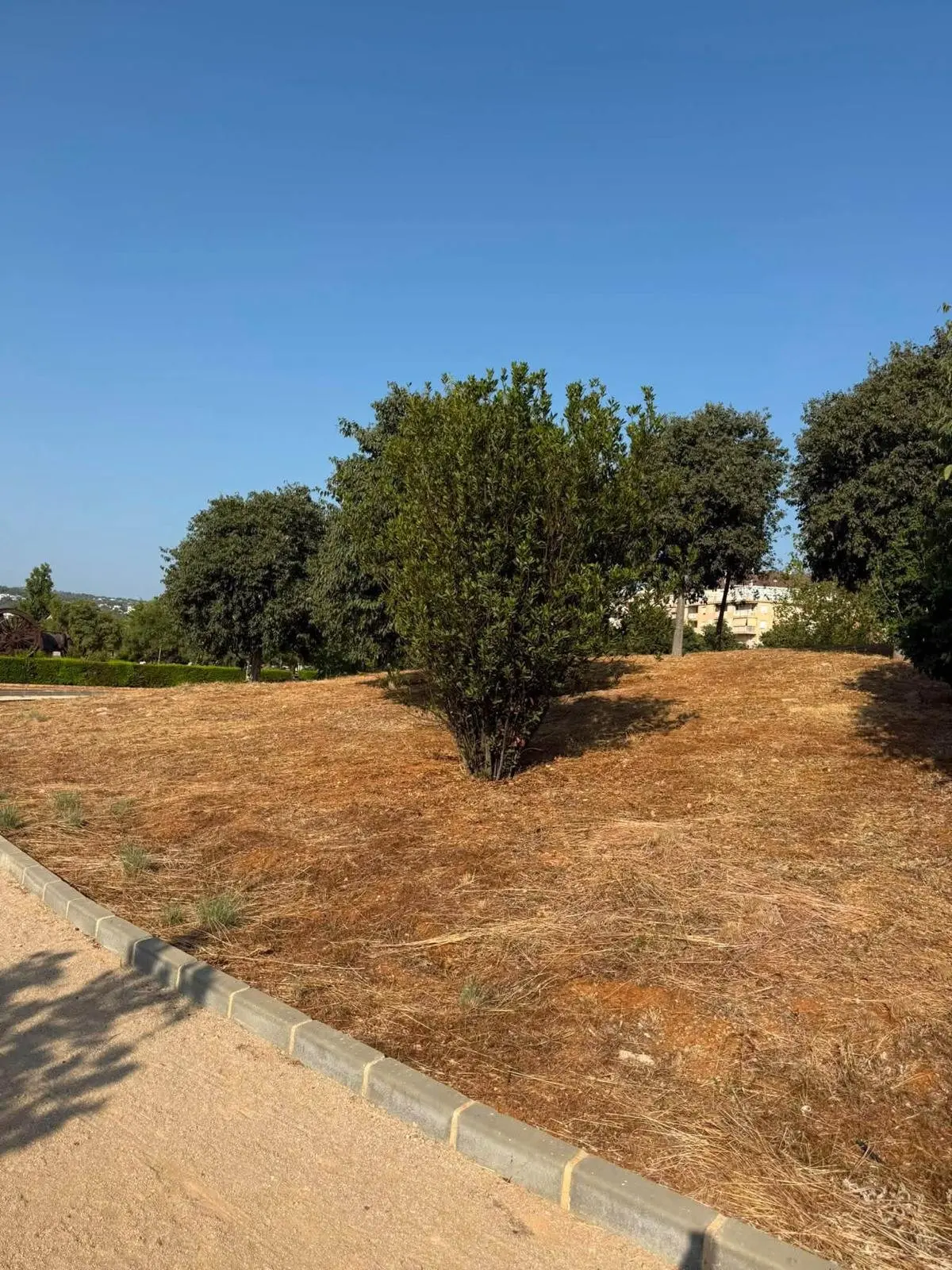
The paradox comes from the Town Council itself. The images it releases to showcase its maintenance work do not show leafy parks, but plots of earth with dry grass or recently cleared ground, sparse trees and little shade.
They reflect the current management model. In July 2025, the Town Council awarded the contract for clearing and maintaining green spaces to the company Actúa for 195,000 euros annually over two years, with the possibility of extension. It covers about 60 green spaces in Les Marines, Montgó and Les Rotes, with between two and six interventions per year. In other words: much of the green space on the outskirts is neither watered nor landscaped; it is periodically cleared.
The approach is different in the town centre. The Town Council strengthened garden maintenance with two additional workers in spaces such as Glorieta del País Valencià, Archiduque Carlos park or Elx street, some 6,000 square metres that function as a climate refuge. The municipal Parks and Gardens team comprises 23 people.
"Grass is a plant too"
The Town Council does not deny that difference; it defends it. When presenting the contract, the then mayor, Vicent Grimalt, asked residents to understand that not all green spaces should be maintained to the same aesthetic standard. "A green space should be green", he said, and he championed the spontaneous vegetation and biodiversity that many of these areas harbour. "Grass is a plant too", he added.
It is a model with supporters in ecological urban planning, which advocates naturalised spaces over lawn and ornamental gardens. The question that the photos raise is different: whether a dry piece of land, cleared only a few times a year, with the odd isolated tree and no shade or paths, fulfils that function or is simply vacant land zoned as a green space.
La Nucía: the same climate, a different picture
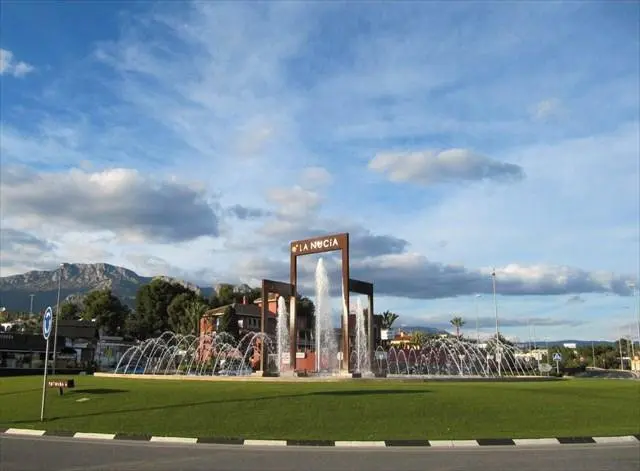
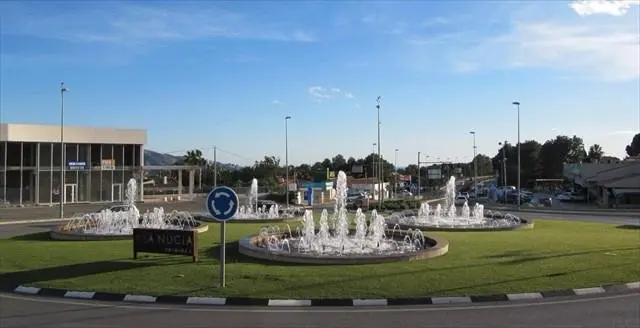
Just over an hour from Dénia, in the neighbouring Marina Baixa, La Nucía shares the Mediterranean climate of long, dry summers. Its most visible public spaces, such as the roundabout at the entrance to the municipality, show well-kept green grass in early October, with Puig Campana in the background.
It is a showcase space, as are the entrances of many municipalities. But it demonstrates that, with the same climate as the Alicante coast, maintaining green spaces with a well-kept appearance is a management decision.
Boadilla and Rivas: green in the dry interior
The comparison can be extended beyond the Valencian Community. Around Madrid, with equally hot and dry summers, municipalities such as Boadilla del Monte or Rivas-Vaciamadrid maintain their urban green spaces with watered grass, hedges and trees, also in neighbourhood spaces and not just in the main parks.
In Boadilla del Monte, almost half of the municipal area consists of green spaces, gardens and forest parks. It is, admittedly, one of the highest-income municipalities in Spain, something to bear in mind when making the comparison.
Rivas-Vaciamadrid offers another example, more focused on water: the Canal de Isabel II invested nearly 12 million euros in 2014 in a network of recycled water irrigation for the municipality, which allows it to water its green spaces without using drinking water.
Alicante irrigates with treated water
Closer to home, and with a comparable climate, Alicante has made recycled water the basis of its model. The city expects that 87 % of its green spaces will be able to be watered with water from its treatment plants, which will allow it to save about 175,000 cubic metres of drinking water annually. This spring it planted nearly 500 new trees in its neighbourhoods to gain shade and combat the heat island effect.
The effort is also reflected in the budget. Alicante has tendered its new parks and gardens contract for 44.7 million euros over four years, and between the contracting companies and the municipal workforce it will have about 200 people dedicated to caring for its green spaces.
Grass that withstands the heat
The climate argument also has a technical answer. Not all grass varieties consume the same amount of water. Gardening guides highlight bermuda, Cynodon dactylon, known as grama, as one of the best options for the Mediterranean climate: it resists heat, drought, trampling and salinity, and regenerates quickly. Hybrid varieties may need up to 30 % less water than fescue, the most common grass in cool climates.
It is not a magic solution. Bermuda needs watering in summer, because drought stops its growth, and it yellows in winter when temperatures drop below 5 degrees. But it tolerates recycled water well, even moderately saline water, which makes it a realistic alternative if combined with an irrigation network of that type.
The great green lung, still a project
The Town Council's major green initiative is the Bosc de Diana, whose first project dates back to 2008. Today there is a section of about three hectares next to the TRAM line. In March 2025, its expansion to about 51,000 square metres was presented, with about 500 olive, carob, nettle and pine trees and a hundred almond trees, with a budget of 3.7 million euros. The project stalled in September 2025 due to a legal challenge, and the two million euros in European funds earmarked for it were allocated to other works. In April 2026, the plenary session initiated proceedings for the Alqueries Special Plan, which includes it alongside a flood park.
Meanwhile, shade remains pending in many children's play parks, which remain exposed to the sun all day and empty in summer. The installation of shaded areas is among the projects voted for in the participatory budgets.
What model of city does Dénia want?
Dénia meets on paper the green space standards required by law. What is under discussion is quality, and there are at least three models: that of naturalised areas that are periodically cleared, which the local government defends; that of the Mediterranean garden with adapted species and shade-providing trees; and that of hardy grass watered with recycled water, as other cities do.
Each has different costs, water consumption and results. Comparison with municipalities that share the same climate shows that green is not determined by the sky alone, but by the decisions of each town council. The question is no longer whether Dénia can have well-maintained green spaces, but what model it wants for its residents and what it is willing to invest in it.
Sources
- Ayuntamiento de Dénia, nuevo contrato de mantenimiento de zonas verdes (julio de 2025)
- Denia.com, presentación del contrato y declaraciones de Vicent Grimalt (2 de julio de 2025)
- Ayuntamiento de Dénia, proyecto del Bosc de Diana (marzo de 2025)
- Denia.com, Bosc de Diana y declaraciones de Rafa Carrió (marzo de 2025)
- Dénia FM, paralización del Bosc de Diana y reubicación de los fondos (septiembre de 2025)
- La Marina Plaza, pleno del Plan Especial Alqueries (abril de 2026)
- La Marina Plaza, parques infantiles sin sombra (agosto de 2025)
- Universidad Complutense de Madrid, análisis turístico de Boadilla del Monte
- BOE, licitación del contrato de zonas verdes de Boadilla del Monte (marzo de 2016)
- Retema, red de riego con agua regenerada en Rivas-Vaciamadrid (julio de 2014)
- Ayuntamiento de Alicante, riego con agua regenerada en zonas verdes
- Diario de Alicante, plantación de arbolado en los barrios (abril de 2026)
- El Periòdic, contrato de parques y jardines de Alicante
- Infojárdín, ficha de la bermuda híbrida
- Zulueta Corporación, céspedes adaptados al clima mediterráneo
- Paisajismo Digital, variedades de césped para espacios públicos
Get La Marina Times in your inbox
The most relevant news of the Marina Alta every morning, or the week's most read every Friday.