A shellfish from the depths
The red prawn of Dénia is, in scientific terms, Aristeus antennatus, a species that lives in much of the Mediterranean. It inhabits dark waters, between 300 and 800 metres deep, and is recognised by its intense red colour, elongated body, fragile shell and a large head, where much of its flavour is concentrated.
The prawn auctioned in Dénia comes from fishing grounds located about 20 miles from the coast, in the marine zone separating Marina Alta from Ibiza, with depths between 500 and 800 metres. Some experts attribute its firm texture and intense flavour to these depths and the nature of the seabed, although catches in that zone tend to be smaller than in other fishing grounds.
From the seabed to the fish market
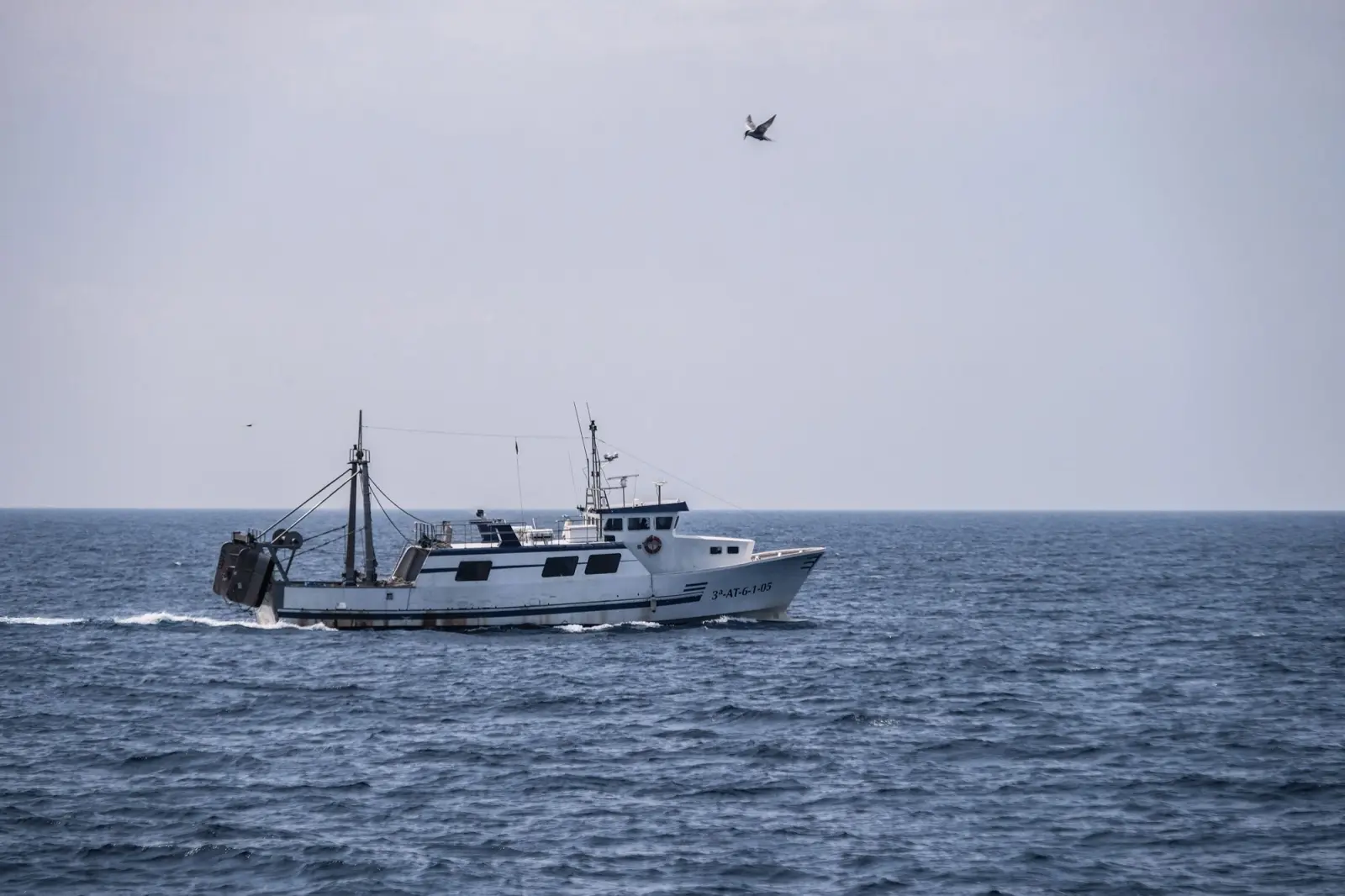
The red prawn is caught using trawl nets, always on muddy seabeds. The net slides slowly for about five hours before being hauled onto deck. "The prawn is around all year, but it's very unpredictable," summarises Juan Antonio Sepulcre, master of the Dénia Fishermen's Brotherhood, who has spent four decades dedicated to this fishing. A day can yield barely 10 or 15 kilogrammes or exceed 50.
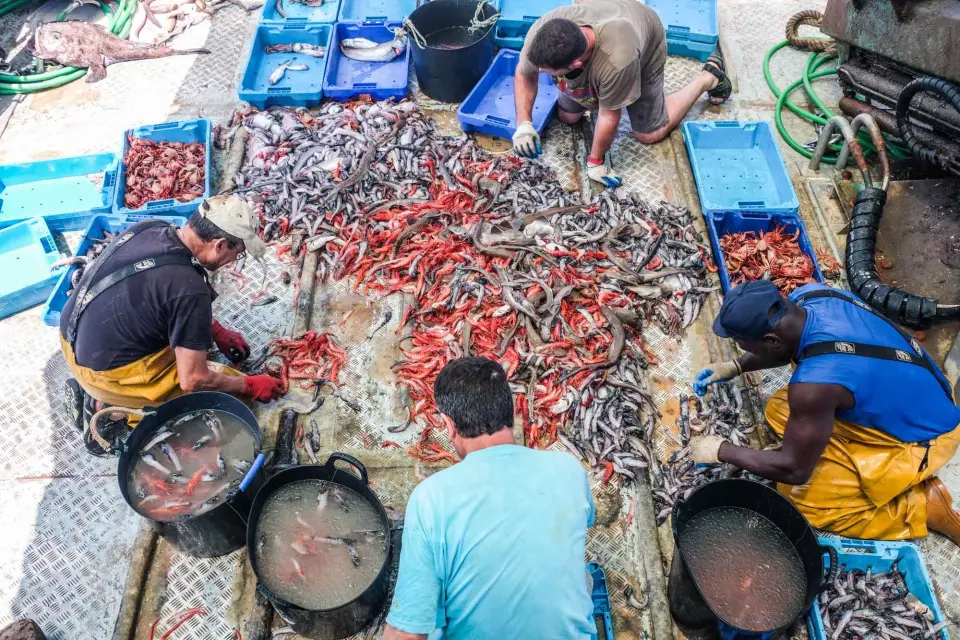
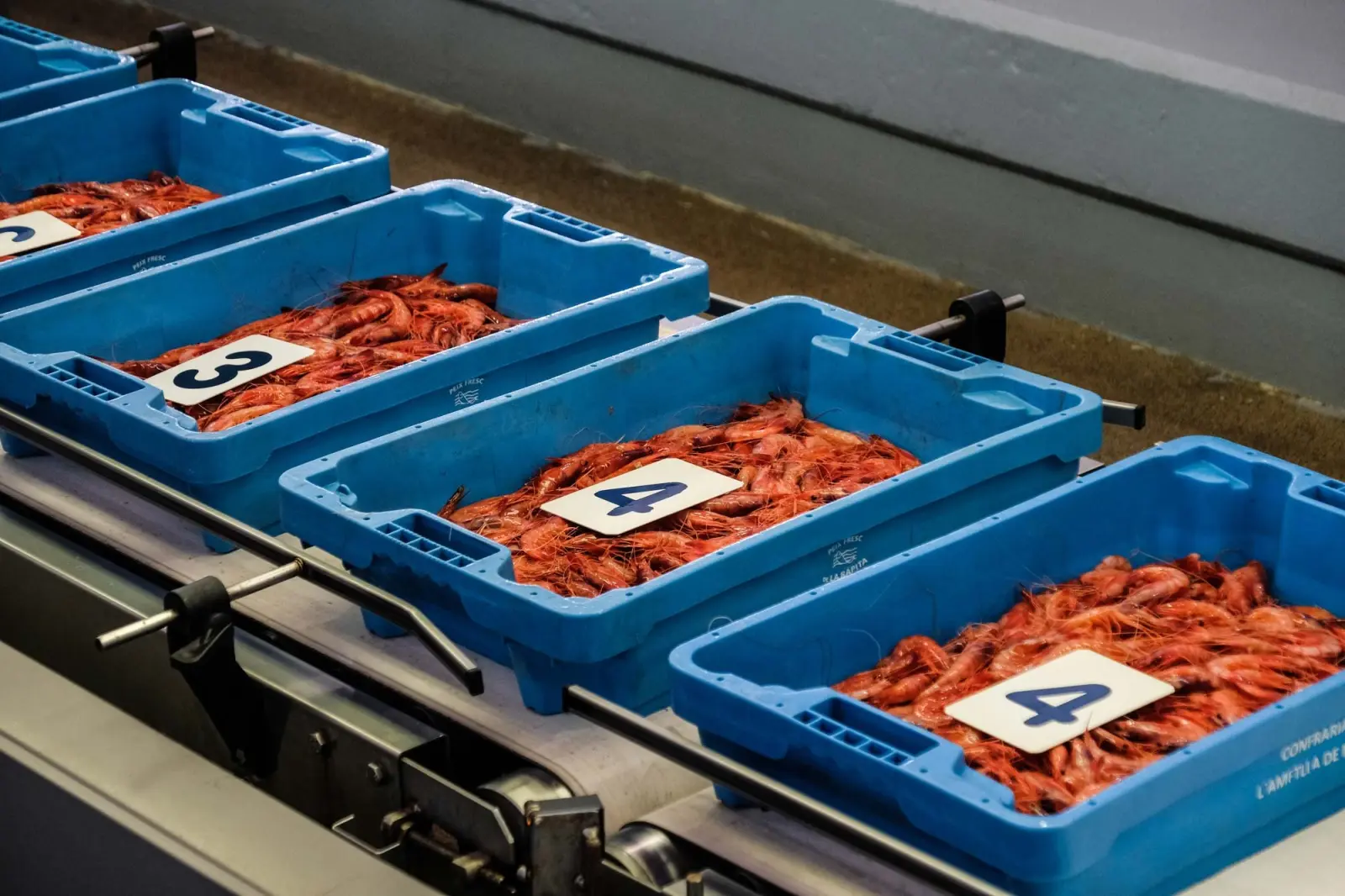
The value of the product is largely determined on the boat itself. As soon as the net comes up, the crew removes species that could damage the prawn, such as crabs, washes it with sea water and covers it with ice. It is then classified by eye, combining weight and length: the first category contains between 17 and 19 pieces per kilo; the second, between 28 and 29, and the third, between 37 and 38. A broken prawn loses presence, juices and price, which is why it is handled with extreme care.
The prawn boats are the last to reach port before the auction, which usually begins at five in the afternoon. Between capture and the fish market, no more than two hours pass.
Pepe el Pegolí and the birth of a myth
The fame of Dénia's red prawn cannot be explained by the sea alone. According to Sepulcre, the restaurateurs of Dénia were the first to, in the nineteen-sixties, know how to value and work with this product. And if there is one name associated with that story, it is José Piera Puchol, Pepe el Pegolí.
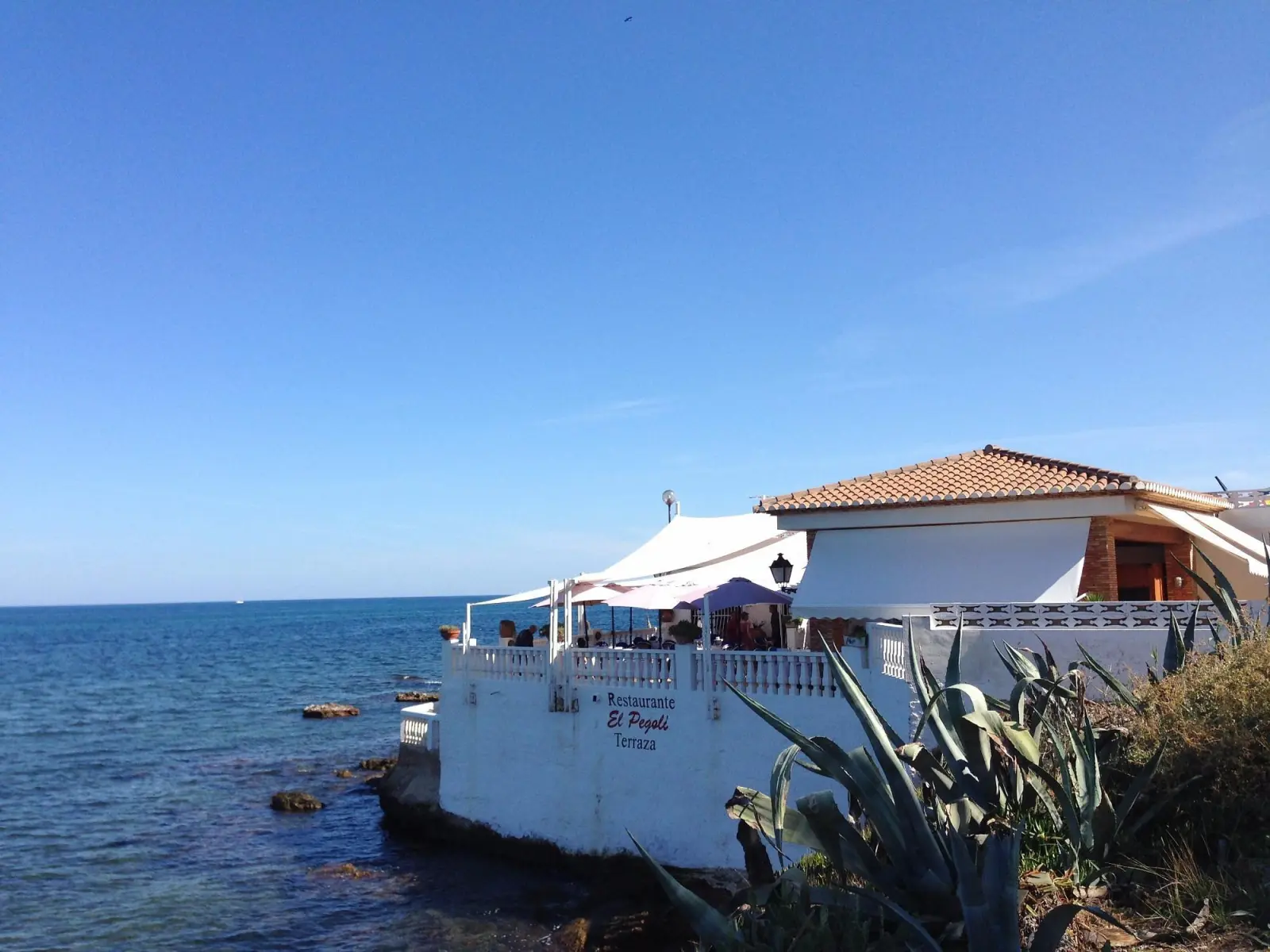
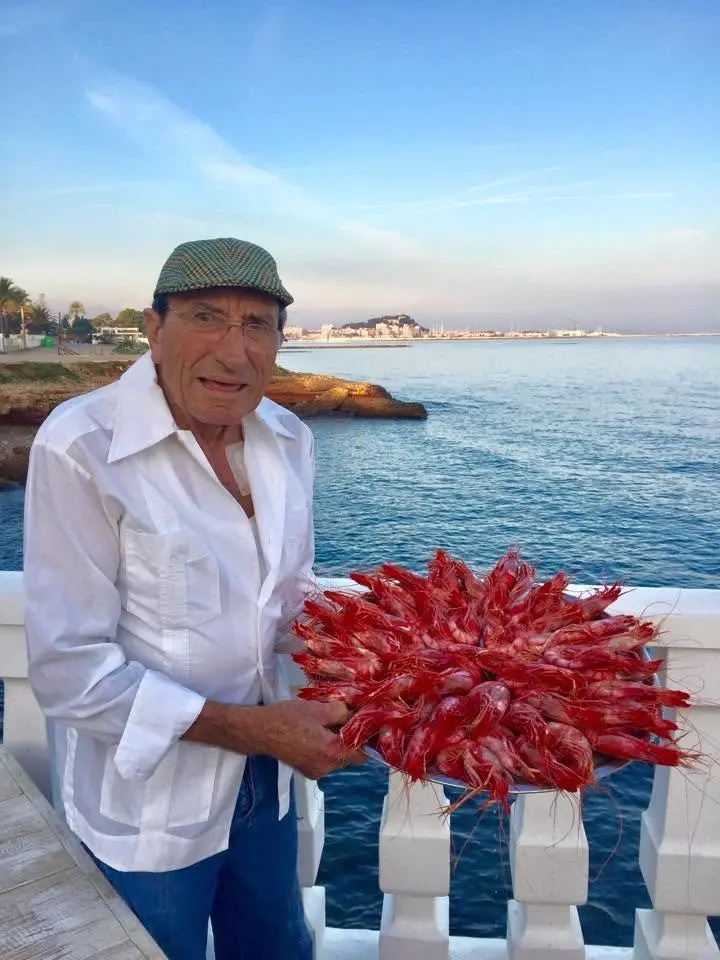
The nickname came from Pego, the Marina Alta municipality where his family originated. In 1943, the Pieras opened a modest bar on the rocks of Les Rotes, on Fenix Street, literally above the sea. In its early days, a fixed menu was served. Pepe was the one who turned that beach bar into a reference point, and the red prawn into its hallmark.
He is considered one of the first hospitality professionals who gave value to the red prawn and promoted it from his kitchen, alongside arròs a banda. For many, he was the master of many in how to cook it: an exceptional product treated with simplicity and respect, without artifice. His restaurant gained fame in Dénia, throughout the comarca and beyond, and came to be described as the place that put Dénia's red prawn on the map.
His influence also extended through those who worked with him. Luis Sendra, for example, left the dining room of El Pegolí to open his own restaurant in 1974 on the same Fenix Street, another classic of Les Rotes.
Pepe el Pegolí also had another passion: archaeology. He collected objects he found while fishing or that got caught in the nets of the boats, and in 2016 he donated that collection to Dénia Town Hall. Two years earlier, in 2014, the International Creative Cooking Competition for Dénia Red Prawn had paid tribute to him in one of its early editions.
He died in August 2019, at the age of 76. Following his death, his two daughters, Mari Ángeles and Mari Luz Piera, took over and continue to run El Pegolí, in the same balcony overlooking the sea at Les Rotes. They maintain their father's legacy with the same quality and the same tradition, with the red prawn as the protagonist of the menu.
That alliance between the kitchen and the fleet is the basis of a prestige that is today recognised by wholesalers across Spain. When fishermen realised they had a very special product, Sepulcre explains, they began to give it extraordinary treatment at each step: catching it without breaking it, selecting it meticulously and bringing it to the fish market quickly. The buyers who distribute it in the south, he adds, assure that it keeps better, has more flavour and is more refined.
Ximo and the ritual of the Aitana
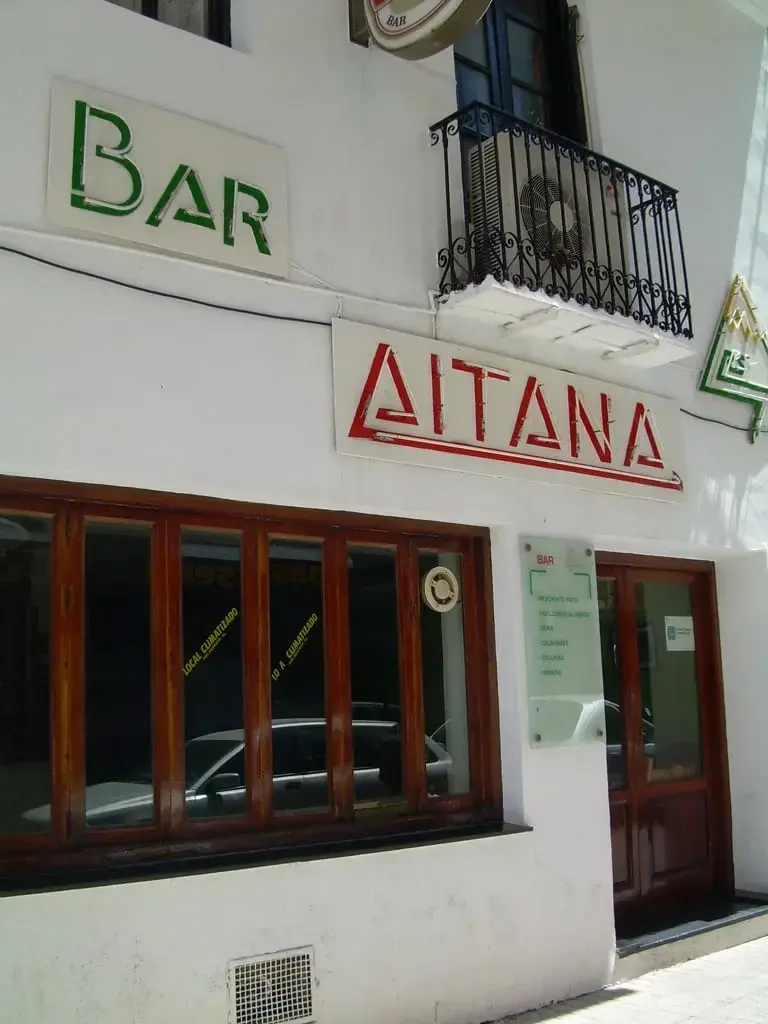
If El Pegolí represents the red prawn facing the sea at Les Rotes, the Aitana was its bar and neighbourhood version. At number 53 Sandunga Street, this small bar with barely a few tables and a long counter became for years a mandatory stop for anyone wanting to eat Dénia red prawn without frills. Today it presents itself as "the temple of the red prawn".
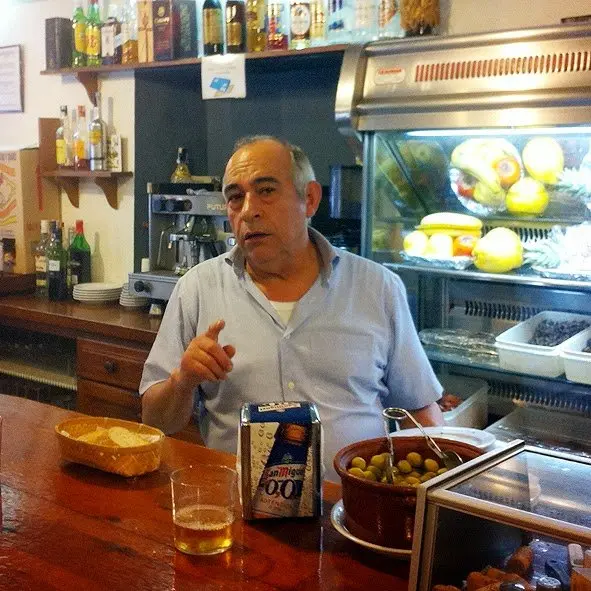
In charge was Ximo, with his wife, Marisol, in the kitchen. There was no menu or display cases. What Ximo had bought that afternoon at the fish market auction was served, and in the order he decided: boiled red prawn, Norway lobsters, shrimps, cuttlefish, clams, mussels, red mullet fries or fried anchovies. No one asked for anything; the dishes arrived and each diner decided when to stop. Queues at the door before opening were part of the ritual.
The bar's operation followed the rhythm of the fleet. According to those who frequented it, if the boats did not go out to fish, the Aitana did not open, and in the afternoon Ximo would go to the fish market to wait for the boats to arrive to prepare the next service. It was the most direct expression of what makes Dénia's red prawn unique: the journey, of barely a few hours, between the fish market and the plate.
Its character, as direct as its cuisine, forms part of the legend of the place. But above all, its boiling point for the cooked red prawn earned it the loyalty of several generations of customers, from Dénia and beyond, who made the Aitana one of the great informal ambassadors of the product.
From Dénia to all of Spain in a few hours
The red prawn is, literally, an ambassador that travels. Digitisation of the auction allows restaurateurs and wholesalers from any point in the country to bid remotely, connected to several fish markets at the same time to compare prices and qualities. According to the Brotherhood, 40 percent of its catches, not just prawn but all types of fish and shellfish, leave the comarca. In just a few hours, prawn auctioned in Dénia can be in restaurants in Madrid, Barcelona or even abroad.
Each dish served far from Marina Alta carries the name of the city on the menu. That is, probably, Dénia's greatest promotional asset: a product that is requested for its origin.
A competition that takes Dénia to kitchens across Spain
The city has also turned the prawn into a showcase for chefs from across the country. The International Creative Cooking Competition for Dénia Red Prawn, organised by the Association of Hospitality and Tourism Entrepreneurs of Marina Alta (AEHTMA) with Town Hall, held its fourteenth edition in March 2026 at the Municipal Market.
The eight finalists came from Barcelona, Madrid, Lleida, Girona, Ciudad Real and Dénia itself. The winner was Jesús Iván Anaya, from the restaurant El Mirador de La Mancha, in Villarrubia de los Ojos (Ciudad Real), with a red prawn "with garlic". The competition distributes 3,000, 1,500 and 1,000 euros to the first three, as well as a trophy designed by sculptor Toni Marí.
The event is not designed for the public, who do not taste the dishes, but to assert on a national scale the value of the prawn caught by fishermen from Dénia and, by extension, other local products. The fact that the best Dénia red prawn dish of 2026 came from a La Mancha kitchen sums up its reach well.
The symbol of a creative city
The red prawn is also the most recognisable emblem of the candidacy that led Dénia to be declared a UNESCO Creative City of Gastronomy in 2015, a unique recognition in the Valencian Community. Already in 2012, when Town Hall was preparing that candidacy, the then Tourism Councillor defined it as the great pillar of the project.
In haute cuisine, its great amplifier is Quique Dacosta, whose Dénia restaurant has three Michelin stars. His way of serving it, with practically no intervention, has helped to make it a gastronomic symbol that attracts restaurateurs and diners from across the country.
Luxury prices
Prestige is reflected in the fish market. Prices can reach 300 euros per kilo during periods of greatest demand, such as Christmas. In recent years, however, the peak season has also shifted to summer, due to sustained pressure from tourist demand.
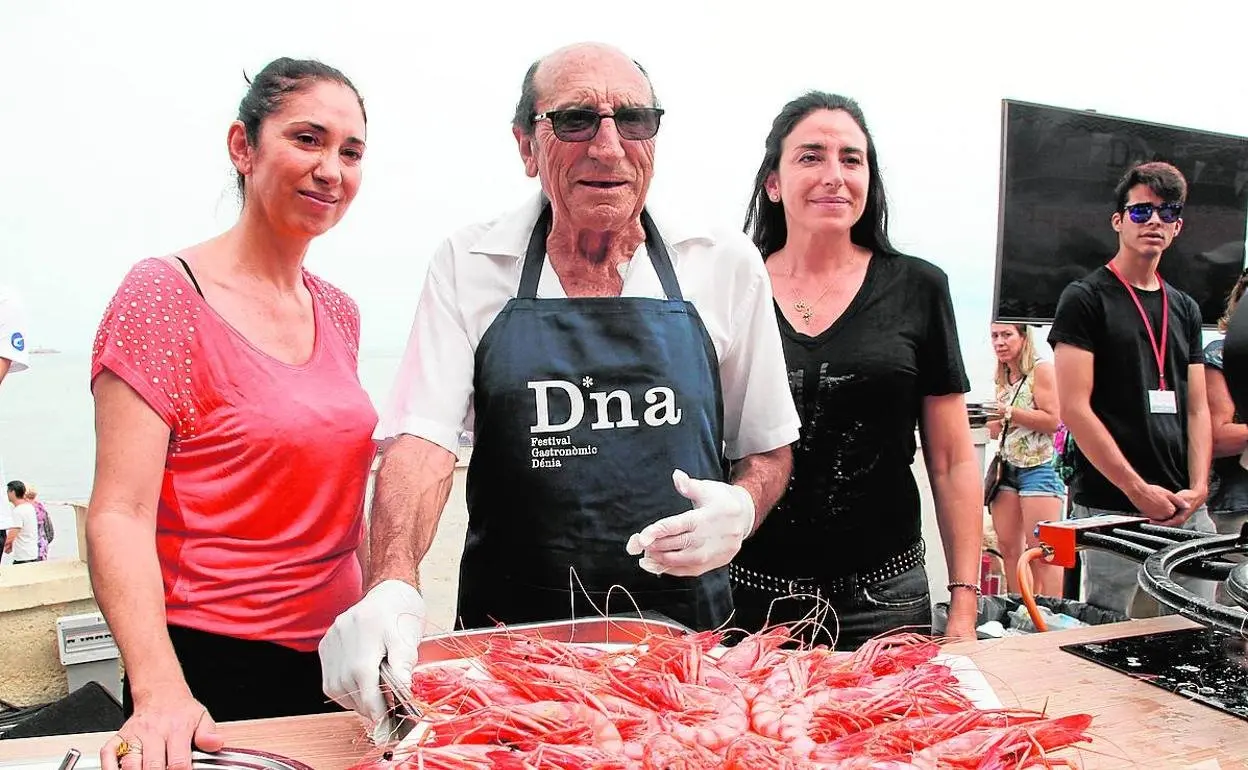
The record came in September 2023, coinciding with the D*na Festival Gastronòmic: the first-category prawn reached 290 euros per kilo at Dénia's fish market. The Brotherhood attributed it to a specific situation, with only two prawn boats fishing due to the closure.
Does it have protected designation of origin?
No. Dénia's red prawn does not have an officially recognised Protected Designation of Origin (PDO) or Protected Geographical Indication (PGI). What does exist is a registered trademark.
Dénia Town Hall applied for registration of the trademark "Gamba roja de Dénia" at the Spanish Patent and Trademark Office on 22 June 2012, with the stated objective of achieving a PGI in the future, and obtained registration on 9 October of that same year. The trademark remains in force: it appears as registered, with number M3036301, and its proprietor is the Town Hall itself.
It is a combined mark, which links the name to a logo with the silhouette of a red prawn, and protects three areas: the prawn itself in fresh, frozen, smoked or salted state, and prepared dishes made with it; its import, export and wholesale, retail and internet sale; and catering services.
The figure chosen, however, marks a difference with other ports. It is an individual mark, that is, a sign owned by Town Hall that distinguishes its products and services, but not a seal that certifies the origin or quality of each prawn marketed under that name. The PGI sought in 2012 has not materialised.
Comparison with Palamós is inevitable. The same species is fished there, in Garrucha or in Calp, but Palamós has a Guarantee Mark, a figure that regulates the capture, first sale at the fish market, handling and marketing under supervision. Dénia, on the other hand, bases its differentiation on reputation, selection on deck and fish market traceability.
For the consumer, the key is on the label: it must indicate the trade name, scientific name, capture zone, production method, freshness, size and operator details. In the absence of an official seal, this is the best guarantee that the prawn being bought is truly from Dénia.
A future conditioned by quotas
The great challenge for the red prawn is in the sea. Since 2026, each Mediterranean trawler has an annual catch limit for red prawn. Spain has 730.86 tonnes this year, distributed among 323 boats, and the Ministry of Agriculture has extended the reference period to 2019-2024, taking the three best years for each vessel.
The sector views these limits with concern. Sepulcre warned in 2025 that some boats had consumed 40 percent of their annual quota in just a few months, which could cause shortages at certain times of the year. In his view, it would be more logical to reduce the number of boats than to limit each one's catches so much, because the weaker vessels run the risk of disappearing.
Added to this challenge is generational succession. The master himself, son and grandson of fishermen, began fishing at fifteen years of age in a small family boat. His descendants have no intention of continuing the tradition.
The future of Dénia's red prawn, the product that has carried the city's name to the best kitchens in the country, depends in large measure on someone continuing to go out and catch it.