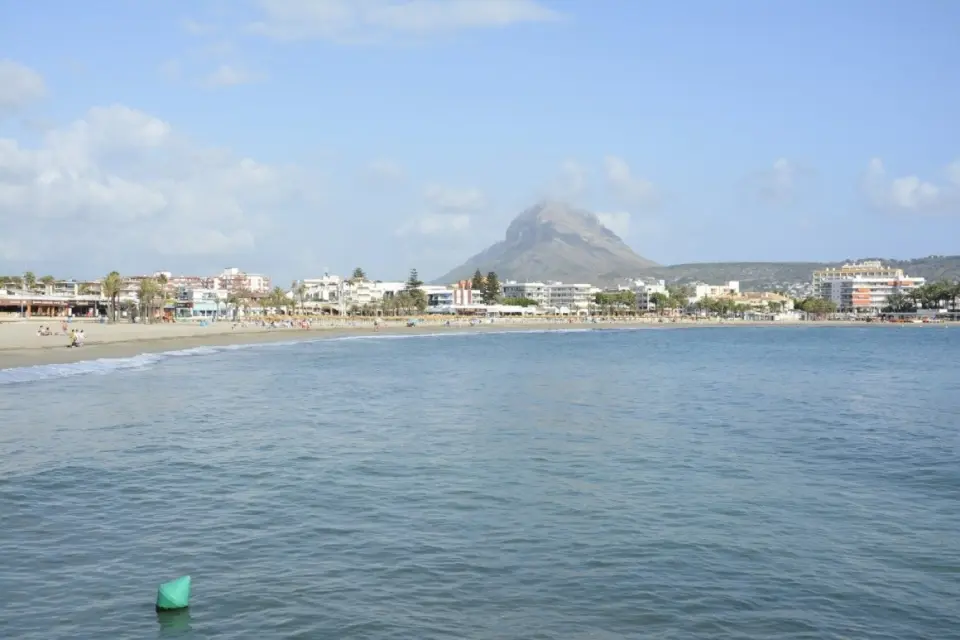
Xàbia wants a digital control centre
On 17 August, Xàbia Town Council announced it had obtained financing from the European FEDER 2021-2027 funds, managed by the Ministry for Digital Transformation, to modernise and digitalise the municipality. According to the council statement, this is the first time Xàbia has secured financing of this type, and it is one of five municipalities in the Valencian Community selected in the call, alongside Valencia, Benidorm, Alcoi and La Nucia.
The mayor, Rosa Cardona, presented the project as a leap towards the city of the future. "We don't want Xàbia simply to adapt to the future; we want it to be ready to lead it," she said.
What the project will do
The centrepiece will be a Smart Office, a digital management and control centre that will bring together information from different areas of the municipality in real time. According to the council, the project includes:
- Sensors and Internet of Things to know traffic, mobility, capacity and tourist activity in real time.
- Artificial intelligence to analyse large volumes of data, detect patterns and anticipate situations such as peaks in visitor numbers or traffic jams.
- Protection of the coast and woodland: monitoring of seagrass and boat mooring, and early detection of fires.
- A digital twin of Xàbia: a virtual replica of the territory, fed with geographical, tourist, environmental, meteorological and mobility data, to study scenarios and plan.
- Tools for the tourism sector: better understanding visitor flows and facilitating direct sales of accommodation, activities and experiences.
The "ChatGPT of Xàbia"
The expression that gave the project its name was used by the mayor herself at the plenary session on 27 August. According to La Marina Plaza's report, Cardona described it as a municipal guide, a "ChatGPT of Xàbia", with information to act in accidents, control beach capacity, monitor marine buoys and sensorise the municipality. She added that these are technical matters still to be developed.
How much it costs
The plenary session also served to pin down the figures. In response to questions from the PSOE spokesperson, José Chulvi, who called the subsidy good news, the finance councillor, Teresa Legay, explained that the European aid amounts to 1.2 million euros and that the council will have to contribute a further 750,000 euros. The August statement had mentioned 1.875 million.
Legay also clarified that the aid resolution is still provisional and that what was presented is a report, drawn up by an interdepartmental commission under the direction of the tourism officer, with support from external advisors that cost between 14,000 and 15,000 euros. The Ministry will draw up the technical project.
Vox councillor José Marcos Pons also welcomed the subsidy, but called on the local government to inform its social media followers of the council's cost.
The question of data
One of the aspects that raised the most doubts at the plenary session was the handling of information. Chulvi expressed concern about the use of personal data, such as individual movements or vehicle registration plates, and asked who would be responsible for keeping them secure.
This is a central issue in any smart city project. Systems that count people, analyse mobility or read registration plates are subject to the General Data Protection Regulation, and the new European artificial intelligence regulation sets additional obligations for certain uses in the public sector.
The companies involved
The call's rules require private companies to commit to participating by submitting letters of commitment. At the plenary session, Legay estimated there would be between 20 and 30, or even 40, and referred to the file. The list has not been made public.
Knowing who they are would make it possible to find out what part of the project will remain in the hands of companies from the comarca and which will come from providers outside the area.
The technology already on the streets
Xàbia's project is not the only example of municipal digitalisation in the comarca. Dénia has had a smart parking system in its blue zone for years: magnetic sensors detect in real time whether each space is occupied, and that information reaches drivers through an app and electronic panels. The council has just put out a tender for the new management contract, which will expand the panels and incorporate payment with Bizum from a mobile phone.
Artificial intelligence reaches small businesses
Digitalisation is not limited to town halls either. In June, the business federation FEMPA, through its Accelerate SME Office, organised with CREAMA and the Scientific Park of the University of Alicante a conference to bring artificial intelligence solutions with immediate application to small businesses, shops, self-employed people and industries in Marina Alta. The organisers highlighted the interest of companies and the need to continue promoting initiatives of this kind.
Technology companies in the comarca
Marina Alta is not a technology hub, but it has companies that have made technology their business. Some examples:
- MiAgua (Xàbia): a water consumption monitoring service that allows owners and businesses to detect leaks in time and avoid unexpected bills.
- The Here Gallery (Dénia): an online gallery for photographers, amateurs and collectors.
- Marinalia: an online shopping centre for the comarca, awarded for its innovative character.
- focus360º (Dénia): a business management application born in Dénia's Business Incubator, once considered Marina Alta's first startup.
Talent is also starting to move: the First Marina Alta Inter-Centre Hackathon brought together students and companies in Dénia to work on real challenges.
What remains to be seen
Xàbia's project opens a debate that will grow in the coming years: what data do town halls collect, who manages it, how much do these systems cost and whether they help solve the everyday problems of residents. The answers will depend on the final report, the Ministry's technical project and the companies involved.