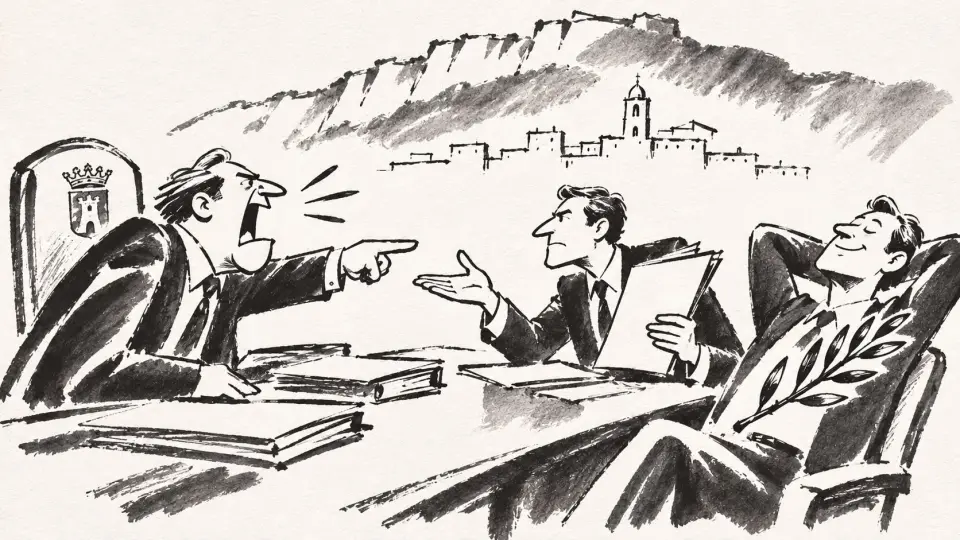
Gent de Dénia has announced that it will not join the political war. And seeing the spectacle offered by some of our representatives, the temptation is understandable. Between politicians who announce the apocalypse if the others govern and others who seem incapable of recognising a single achievement of their opponent, any appeal to common sense sounds almost revolutionary. Mario Vidal and his party call for respect, dialogue and less confrontation. Nothing to object to. The problem is that in politics, agreeing with everyone is usually much easier than solving anyone's problems.
Because it is worth clarifying one thing: confrontation is not necessarily bad. What is bad is insult, lies, gratuitous discrediting or turning the opponent into an enemy. But debating firmly, denouncing errors and demanding accountability is not only legitimate: it is one of the obligations of anyone involved in politics. If a government makes a wrong decision, the opposition is not there to pat it on the back and suggest they discuss it calmly over coffee. It is there to demonstrate why it is wrong, offer an alternative and defend it, even if someone dislikes it. Democracy does not need politicians who are permanently angry, but neither does it need a collection of diplomats determined not to upset anyone.
Gent de Dénia knows this perfectly well. In 2023, Mario Vidal called for a recorded vote on the General Structural Plan and his party voted against a document that incorporated a sensitive clause on municipal liability. That was outright political confrontation, with names, votes and accountability. No one needed to turn the opponent into an enemy for the disagreement to be clear. That is precisely the kind of politics worth championing: the kind that takes a stand, takes risks and leaves a record of its decisions. Because common sense is all well and good, but sometimes it simply means standing up and saying no.
This same spirit of firmness should be present in the rest of municipal debates. Dénia does not lack issues that deserve demanding opposition: controversial decisions, pending problems and actions by the municipal government that must be subject to criticism. That is where fine words must be backed up by action. Respect between opponents is a virtue, but it should never become an excuse to soften criticism of those with the responsibility to govern. Politics is not about getting along with everyone, but about defending what you believe in, even when doing so is uncomfortable.
Perhaps that is why it would be worth distinguishing between two ways of understanding political peace. There is the peace of the brave, of those who openly disagree, defend their convictions and then are able to sit down to negotiate. And there is the peace of the comfortable, of those who prefer to hide behind good intentions to avoid difficult decisions. Because courtesy is not incompatible with firmness, and harmony loses some of its value when it demands silence in the face of what you consider unjust.
Dénia does not need to choose between a permanent row and impeccably polite silence. It needs politicians who can debate without hatred, reach agreements without abandoning their principles and call things by their name when necessary.
Members of Gent de Dénia, do not join any war of insults. But do not abandon the battles worth fighting either. Because there is something worse than a politician who argues about everything: one who, in order not to upset anyone, ends up defending nothing.