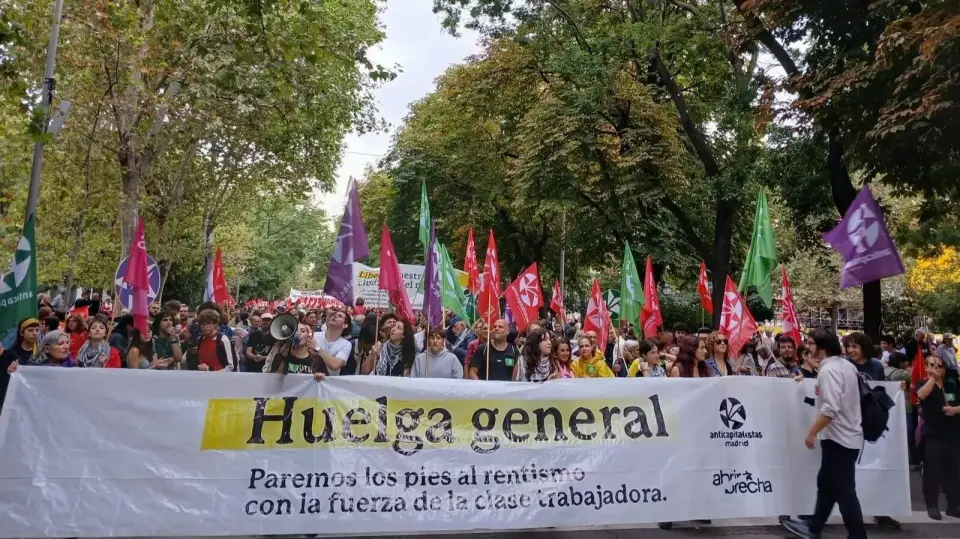
The first general strike in 14 years
Spain will face a 24-hour general strike on Wednesday 11 November for the right to housing, wages and the cost of living. The date, proposed by the Tenants' Union, was confirmed on Wednesday afternoon following a meeting between all the organisations calling the strike.
It is being called by UGT, CCOO, CGT, CO.BAS, Solidaridad Obrera and the Confederation of Tenants' Unions, with backing from other unions including Intersindical, LAB and CIG. It will be the first general strike jointly backed by CCOO and UGT since November 2012, against the spending cuts of the Mariano Rajoy government.
The strike will take place two days before the start of the campaign for the general election on 29 November.
What they demand
The two major unions link housing to working conditions. "The general strike on 11N is the response to insatiable property greed that speculates with one of the main rights of citizenship", say UGT and CCOO in their joint resolution, in which they also demand unblocking collective bargaining, raising wages, reducing working hours and eradicating precarity.
The Tenants' Union is calling on the Government for indefinite rental contracts, drastic cuts in rental and housing prices, a wealth tax to finance a public housing stock, construction of public housing and seizure of empty homes. "Working no longer guarantees access to housing either through renting or through mortgage debt", said its spokesperson, Alicia del Río.
A strike marked by Maricarmen's death
The date was announced almost at the same time as the death of Maricarmen, an 87-year-old woman whose eviction had made her one of the main symbols of recent housing protests. The Tenants' Union press conference began with words of remembrance for her.
The comarca's most expensive issue, centre of the debate
The strike call speaks directly to Marina Alta, one of the areas with the most difficulty accessing housing on the entire coast. Buying a house in Xàbia now requires 69% of family income, the highest effort on the peninsular coast, and in Dénia there are only 67 publicly-protected flats for more than 50,000 residents.
The comarca is also experiencing the fallout from the collapse of housing decrees in Congress, which left the 2% cap on rent increases removed, and controversy over the management of Sareb properties by Blackstone, in a comarca with hundreds of properties from the bad bank.
Protest is also beginning to gain traction in the streets. On Monday, a cacerolazo in Xàbia denounced how touristification is driving out residents and driving up housing costs, according to La Marina Plaza.