MACMA presents non-motorised mobility plan with 390 km cycle network for Marina Alta
The Marina Alta Intercity Association (MACMA) has presented the first draft of a non-motorised mobility plan proposing a regional network of 390.4 kilometres divided into 77 sections, with an estimated initial cost of €12,351,795.10, according to Radio Litoral.
A plan for the whole region
The Marina Alta Intercity Association (MACMA) has unveiled the first draft of a non-motorised mobility plan that proposes creating a network of cycle lanes and pedestrian paths of 390.4 kilometres distributed across 77 sections, according to Radio Litoral. The initial cost of the project is estimated at €12,351,795.10.
According to Radio Litoral, among the planned actions is a cycle-pedestrian footbridge over the N-332 that would connect Pedreguer and Jesús Pobre, as well as the integration of the region into the European EuroVelo 8 route.
Results of citizen surveys
Radio Litoral reports that, according to surveys carried out, 78.1% of participants own a bicycle, whilst 82.9% believe that safe infrastructure between municipalities is lacking and 68.2% feel unsafe due to motorised traffic. Furthermore, 87.1% consider it a priority to connect urban centres, 69.7% call for easier access to educational, health and sports facilities, and 53.8% demand improved access to public transport stations.
Parking and charging points
The plan includes, according to Radio Litoral, the installation of 120 BikeBox spaces at six TRAM stations, 40 spaces at La Xara Regional Hospital and another 40 at the Ondara shopping centre. To this would be added 400 inverted U-shaped parking racks installed by the municipalities, reaching a planned total of 980 bicycle parking spaces. There will also be 35 multi-function charging and self-repair points.
Information talks and mobile application
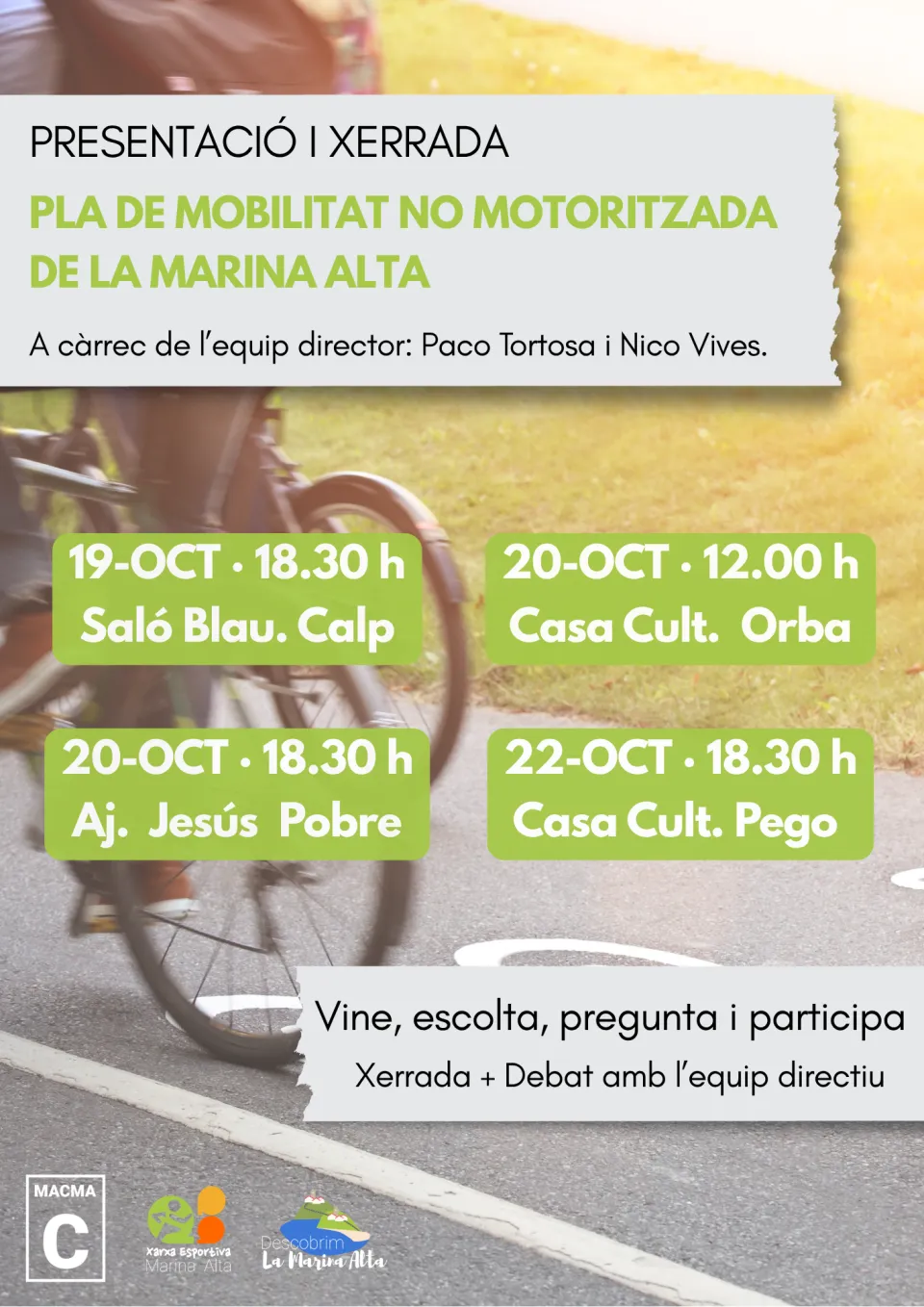
According to the same source, in October a series of informative and participatory talks will be held in different municipalities across the region to present the project to residents. The plan also includes the future development of a mobile application with GPS navigation for cycling routes.
Paco Tortosa, a representative of MACMA, noted that "this project is probably one of the most important that can currently be carried out in Marina Alta to transform the mobility model based on private vehicles".