Pego-Oliva Wetland converts surplus rice straw into livestock feed
Around one hundred hectares of the Pego-Oliva Wetland have been the subject of a campaign that has transformed agricultural waste into a livestock resource, with almost 300 tonnes removed from the land.
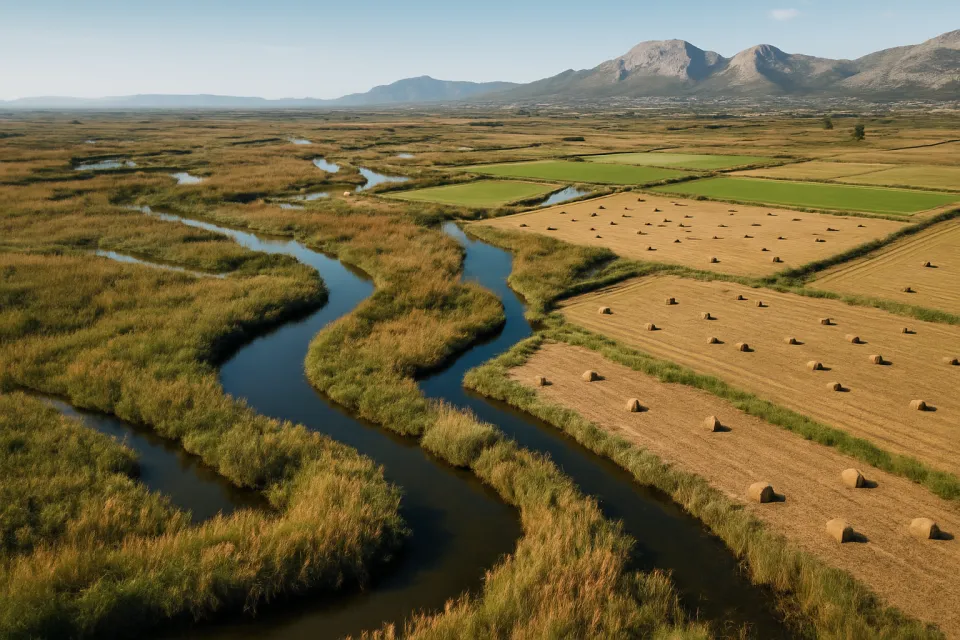
A coordinated operation in the Pego-Oliva Wetland has made it possible to find a use for the rice straw left after harvest, preventing it from accumulating in the fields, rotting or being burned. The work was carried out over approximately 100 hectares and resulted in the collection of 1,500 bales, equivalent to around 270 tonnes of material.
The division of tasks involved several companies: Excavaciones Hermanos Puchalt handled the cutting and gathering of straw in the field, whilst Paja de Arroz Valencia was responsible for compacting it into bales. The Pego-Oliva Wetland Natural Park oversaw the entire process to ensure it respected the environmental criteria of the protected area, working with the farmers and owners of the affected plots.
The recovered material will be destined primarily for livestock farms in the area, which will use it both to feed the animals and to condition their facilities. According to the source consulted, the volume achieved this year exceeded that of previous campaigns, although the development of the work was curtailed by the arrival of heavy rainfall, which forced the collection to be concluded before originally planned.
A project with institutional support
The operation is part of the Xarxa Agrícola, an initiative coordinated by Creama and Pacte'MA, which has the support of LABORA-Servei Valencià d'Ocupació i Formació and the Ministry of Labour and Social Economy. The programme seeks to provide a joint response to the management of agricultural waste and the sustainability of the primary sector in the comarca.
Its promoters link this work with several of the Sustainable Development Goals of the 2030 Agenda, specifically those related to decent work and economic growth, sustainable cities and communities, responsible consumption and production, and the life of terrestrial ecosystems.