Calp's Baños de la Reina receives almost 4,900 visits in first year as museum space
The Roman archaeological site has completed twelve months of regular opening with 4,877 visitors and an investment of €439,388.69 provided by Alicante Provincial Council for its recovery and enhancement.
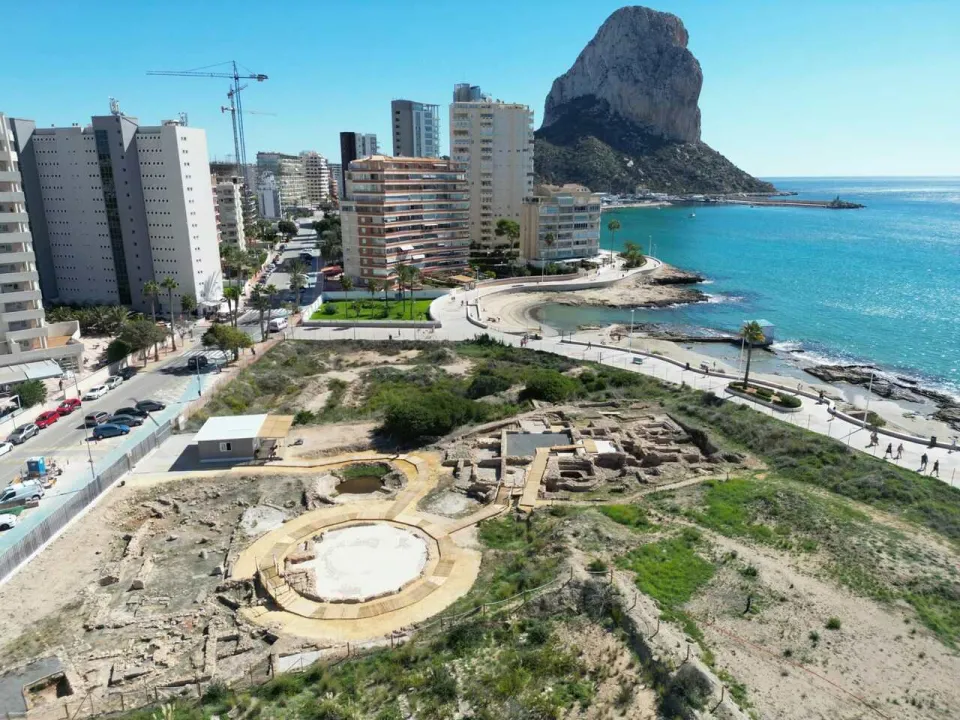
The archaeological site of Baños de la Reina, in Calp, has completed its first year of daily guided visits since opening its doors regularly on 13 September. During this period, the site has received 4,877 people, of which 3,610 come from different parts of Spain and 1,267 arrive from abroad.
Visits, which are free, take place from Wednesday to Sunday and are offered in three languages: Spanish, Valencian and English. The tourist management of the space is handled by the company ESATUR XXI SLU, which is responsible for coordinating guided tours of the Roman ruins.
An investment of over €439,000
The launch of this project has been made possible thanks to a financial contribution of €439,388.69 from Alicante Provincial Council, allocated to cleaning, consolidation, digitalisation and museumification of the site. The entrance to the archaeological site is presided over by the mural "Vita in domus", a work by artist Begoña Movellán, which welcomes those who come to see the Roman remains.
Since its reopening, the space has hosted visits from schools and various social and cultural entities, both from Calp and from other towns in the Marina Alta. The interest generated has also extended beyond the local sphere: the Via Verda programme, on À Punt, devoted a monographic report to the site.
Institutional assessment
Calp's mayor, Ana Sala, has highlighted the significance of this heritage recovery process: "the cleaning, remodelling, consolidation, digitalisation and museumification of the Baños de la Reina, together with its permanent opening to the public, constitutes one of the major achievements of this term, fulfilling the long-standing demand to recover and make this archaeological treasure accessible to residents and visitors".
Meanwhile, the councillor for Culture, Guillermo Sendra, has noted that visitors' interest goes beyond conventional tourism, as "they also seek to learn about our history and heritage, diversifying the municipality's offer".